Surrounded by the wilderness of northern Minnesota and southern Canada, I grew up as a child of absolutes. I could hardly have been anything else. Nature, and the One who moves her, is extremely orderly. By observing her, I gradually learned the rhythm of time, a march of the seasons mirroring the Creator’s immutability.
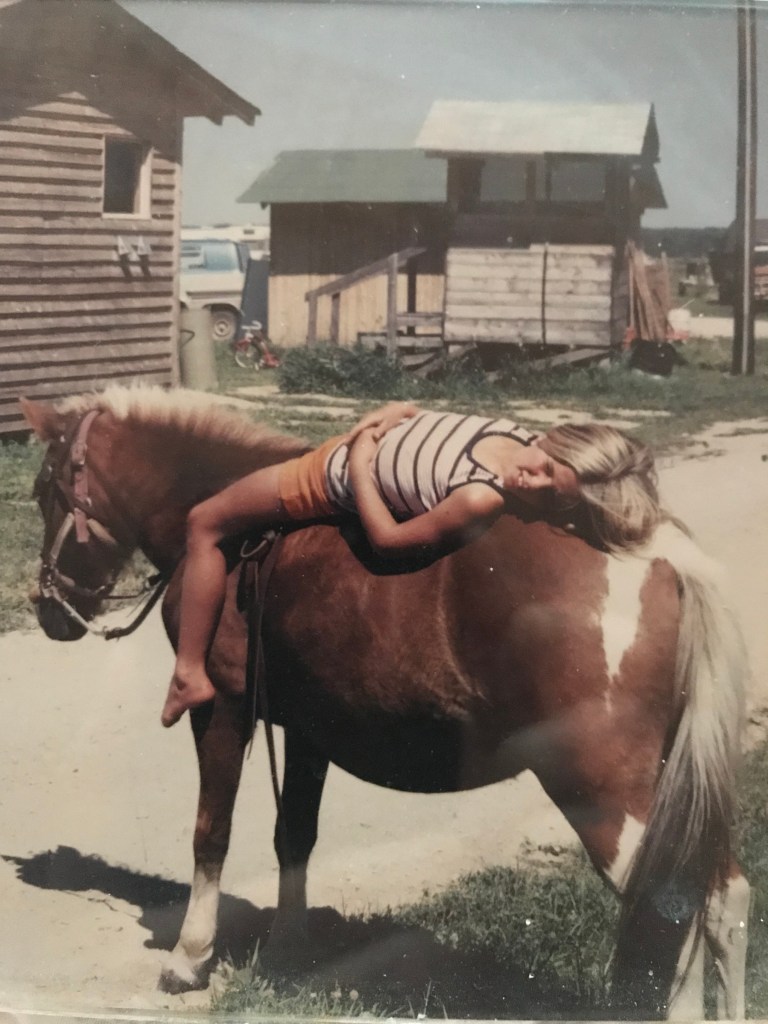
I’m not implying that Nature is predictable, except in its basics. As a youngster, I delighted in observing the variety and unpredictability of the seasons, discovering that I could rely on them to fall into place and evince patterns which foretold some of the changes about to occur. In my natural prime and full of the wonder of creation while yet unburdened by its stresses, I had plenty of leisure to analyze and appreciate the seasons from the back of my new companion. At two years of age, I’d saved every penny to buy a horse and at age eleven could finally afford my part-Welsh, part-Shetland Pony of America.
I remember spring and summer horseback rides at dawn, just as the steam began rising from the inlet and the sun had barely started to eat it away. Dusty and I would leave her paddock through the campground of my parents’ small fishing resort. At a canter, her hooves thudded against the earth, loud in the early morning stillness. I was careful to guide my pony only on grass, avoiding the noisier gravel roads until later in the day for fear of awakening our guests.
Once past the cabins and resort grounds, I’d let her go. Sometimes in our race, we’d scare up a ruffed grouse, scaring Dusty as well. More often she’d stop when we heard a male drumming in the distance as if she, too, felt the reverberation in her chest as I did.
While galloping one day, I’d note the bite of fall on my face, the rich scent of drying and dying herbage, the transposing of the wind from a shush to a hiss as it blew through the grasses. We’d slow down and see the trees transforming, from the orange-tinted tamaracks to the spotty, balding poplars. Only the pines remained steadfast. We’d watch them as the other fickle trees shed their foliage, looking like forlorn skeletons, bony and full of death. Frosted and sparkling even through winter’s snow and ice, the evergreens held their color and gave us hope until spring.
Our family moved closer to town for the winter. Before school each morning, I’d carry buckets of smoking water and measures of oats to the pasture for Dusty. Bareback riding in winter came with the comfort of a heated seat, but Dusty and I preferred wading through weeds and wildflowers to slogging through snowdrifts. We’d mostly wait out winter’s winds and subzero temperatures, impatient for the resort to reopen so we could go back across the border to the Northwest Angle. Every ride there seemed an adventure. Not so much at the farm.
When the snowclad ground melted into muddy turf, bursting with life and sweet with its smell, we returned to the Angle. Rare orchids sprouted and bloomed. Birdsong filled the air. Newborns of every species bounded, sprinted and paddled after their mothers.
Summer served as spring’s anti-climax. Tourists arrived, peopling my world with unnatural creatures. Animals went into hiding. Flies and mosquitoes drove my pony to her cool, dark fly shed during the hot, buzzing daylight hours. I sampled the air every morning for the first feel of frost, a sign that insects and interlopers would leave and our Nature time would begin again.
As an adult, I still loved the regularity and beauty of the seasons. During late summer, thick, pea green algae clung to any boat which stirred Lake of the Woods, leaving a watery trail for miles. I marveled at the light filtering through the trees and stretching across the grass, every scene heightened with greater dimension and vibrance than at any other time of year. Everything seemed more alive at the summer’s end, perhaps because of its impending mortality.
Autumn, touching creation and people alike with pathos, is the most poignant of seasons. A sense of urgency laces the wind, a directive to prepare for winter’s hardships. Cold creeps in at both ends of the day. Swallows line the wires, pausing after their spring and summer pursuit of food. Their fledglings now hunt for themselves, lessening the demands on their parents. The elders sit in rows, beaks moving through long, blue-black wings and murmuring that the time for leaving is soon, soon.
Red-winged blackbirds cluster in huge, raucous flocks to alight upon ripening wild rice. There they gorge, fattening themselves for the strenuous flight South. If anyone approaches, they erupt in clouds of flapping wings and cries of protest.
Cormorants encroach on the inlet, skulking around in the weeds and eating small bullheads or perch. As the cormorants become bolder, the days become shorter. The birds sit on our docks while fishing, true squatters. Seeing how close he can get, my husband extends his arm and inches his boat nearer to shore every morning and afternoon on his way to and from the lake for guiding, finally taking a bird by its curved neck then letting it go.
The wind in the trees sounds tinny. On blustery days, it reminds me of dried gourds being shaken, announcing the cascade of leaves from the trees in a flashy preview of snow. Color explodes from all directions. Red bushes on the islands, gold flowers and pale green or vibrant orange lichens set the stage for the yellowing poplars, maples and bammies. They stand in deep contrast to my perennial friends, the evergreens.
Dusty and I once raced through the seasons. Now they race past me, faster each year. Pushing through grasses extending above my shoulders, I come to a weathered fly shed. And I reflect, as I walk through our little resort that is little no longer, that the trees have grown tall and the men have grown old. As I reach the high spot of ground where my pony lies, I sit down and tell her that it is autumn again.
 Constance Colson-Clay