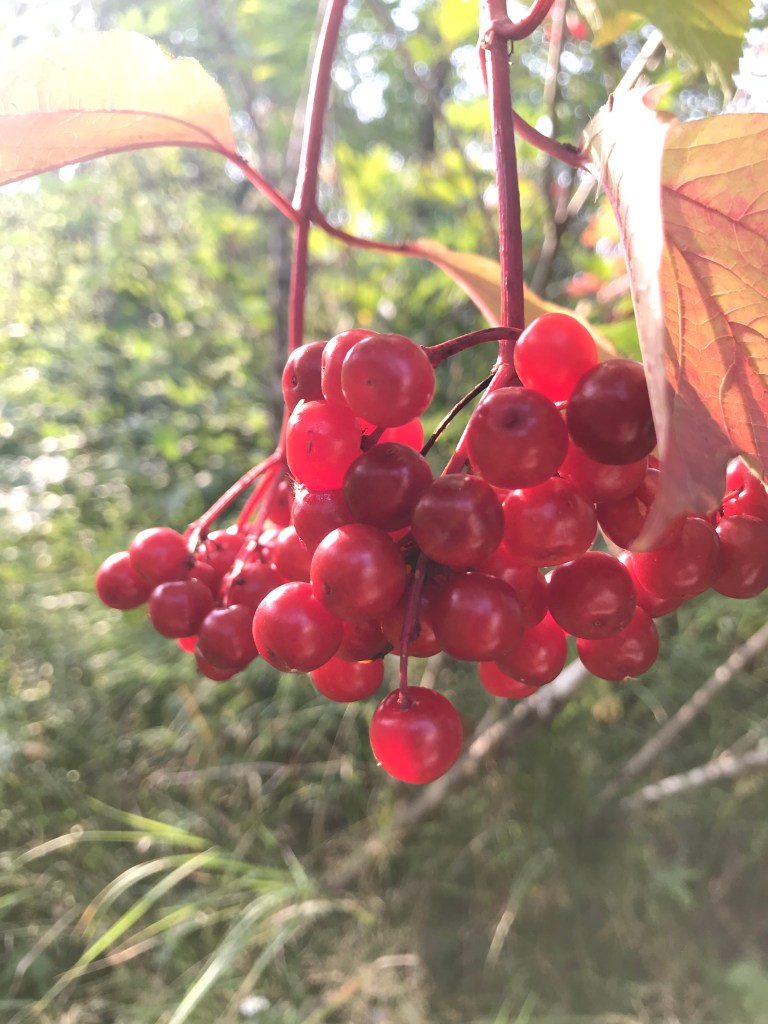
I rarely make cranberry jelly as I did in my childhood and early days of married bliss. It’s too sweet for my tastes anymore. Instead, my husband drinks the juice straight up and says I put too much sugar in mine. As a special treat, we used to make pancakes with my maternal grandfather’s recipe, topped with cranberry sauce and whipped cream.
It’s cranberry season once more, so once more, I’m living this story. Ravaged by extreme weather, invasive weeds and voracious herbivores, our garden produced far fewer tomatoes than usual, which makes our cranberry harvest more valuable than ever. My husband and I picked berries from bushes in our yard, then our youngest daughter cleaned, cooked, drained and ground them. These days I make something like spaghetti sauce from the pulp. I usually add a package of meatballs, but this year our middle daughter contributed homemade ones from a recipe she created. Last year our youngest asked how to make jelly. We used Granny’s recipe, of course.
Crimson jewels my husband picked sit in white ice cream buckets on our kitchen table, facing me, challenging me. He pats me on the back, whispering sweet matrimonial-style nothings: “Honey, how about making fresh cranberry jelly?”
I smile grimly and search for a recipe. I haven’t canned cranberries for years, not since my granny was alive and I helped her transform them into translucent red jelly and dark, opaque sauce. It’s strange that he would remember what I’ve forgotten. I would’ve let the berries hang on the bushes for the cedar waxwings and robins, as I have since Granny’s death.
Several hours later, a heap of consulted and discarded cookbooks covers our kitchen table. Growing up, I lived most of the year here in my maternal grandparents’ farmhouse and spent summers at the fishing resort my paternal grandparents left my family. This house contains three generations of belongings, but I know just where mine are and dig out the dinged-up metal recipe box I started as a child. Under the C’s, I find a worn card that looks as if it might work—I hope.
As I read it and study my own scribbled illustrations, I begin the motions I’ve seen Granny do many times before, when I stood on tiptoe and watched the stove’s heat turn her high, rounded cheeks pink.
Now I put the berries I’ve washed and sorted into a large kettle and add water until they become floating balls, a cranberry stew. I stir, gauging the resistance of the berries, then pour off a bit more water as I remember how they should feel and my mind replays old reels of Granny and me canning. I bring the bobbing berries to a gentle boil, continuing to stir slowly. The water bubbles, pushing the berries up in mounds which heave and overflow like small, erupting volcanoes releasing berry insides instead of lava.
As I stir, I stick my nose into the fragrant vapors and inhale the autumn aroma I’ve forgotten so many seasons: the tart, pickle-like scent of simmering cranberries.
“Your dad thinks it smells like dirty ol’ socks boilin’,” Granny used to drawl, her wrinkled nose twitching and her gray-blue eyes dim behind steamy wire-rimmed glasses. “I like it. It’s a harvest smell.”
Granny taught me homesteading tricks such as taming wild meat with hunks of bacon, making old meat fresh and tender with salt, mending anything with anything, rolling out homemade egg noodles—skills dormant since I ran off to attend college at the biggest school in our state. I never intended to come back or get married, but the man I met who changed my mind brought me home. Maybe someday another generation will live in this old house, too.
I stare at the seething pot on the stove, wishing Granny’s small, tough hands were here to direct me. I can’t remember what to do after boiling the berries, and the recipe card’s directions end suddenly.
Flipping the card over, I discover a note. In her flowery script, Granny completed the recipe, rescuing me from another culinary disaster as she so often did—this time from beyond the grave.
Soon I’m bringing a strained batch of juice to boil and deftly adding ingredients. The smell, the look is right. I stir rapidly, trying to keep splatters from the boiling mixture off my apron: the yellow, flowered apron Granny used to wear. The timeworn fabric covers almost all of me, fitting me as it fit her. I reflect that in several decades more, I will be Granny.
Light pink swirls appear on the juice’s surface as it boils, thickens and reaches the jell point, when two drops of the hot liquid fall simultaneously from a big, metal spoon. I use Granny’s spoon. According to her, the key to successful jelly making is “all in the drops.”
I skim off the mixture’s foam, filling with hot jelly the jars I’ve processed. I taste a spoonful of set foam. It’s perfect. Tangy, sweet, full of pungent flavor. I go on to make the sauce, even though my husband only asked for jelly. I can’t let anything go to waste. It wasn’t Granny’s way.
When I’m finished, I arrange the jars on the table to admire them, as she did. I hold one up to the sun. “Look at that color,” I say, hearing her susurrant voice echo mine. “Like wine. So clear.” The autumn light filters through the jelly, making illuminated stained glass windows which cast a red glow on the wooden table: the glow of scarlet cranberries. The glow of memories.
 Constance Colson-Clay